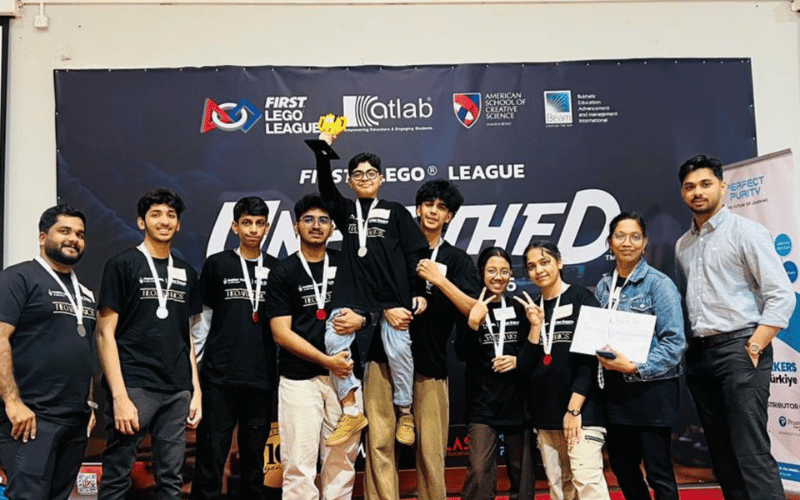
Participating in the First Lego League Challenge held on January 17 and 18, 2026, representing Habitat School Al Jurf Ajman, at the American School of Creative Science was one of the most exciting and rewarding experiences in my STEM journey. Competing alongside talented teams while balancing robotics, innovation, and teamwork created an environment that constantly challenged us to improve and adapt.
Guided by our mentor from CyberSquare, Mohammed Fayiz C V, our team learned the importance of teamwork, precision, testing, and continuous improvement throughout the competition.
The challenge consisted of three rounds, each requiring strategy, accuracy, and consistency. During the breaks between rounds, our team continuously worked on enhancing the robot by testing movements, fixing mechanical issues, adjusting attachments, and improving performance under time pressure. Those moments became some of the most valuable parts of the experience because every small improvement directly influenced the next round.
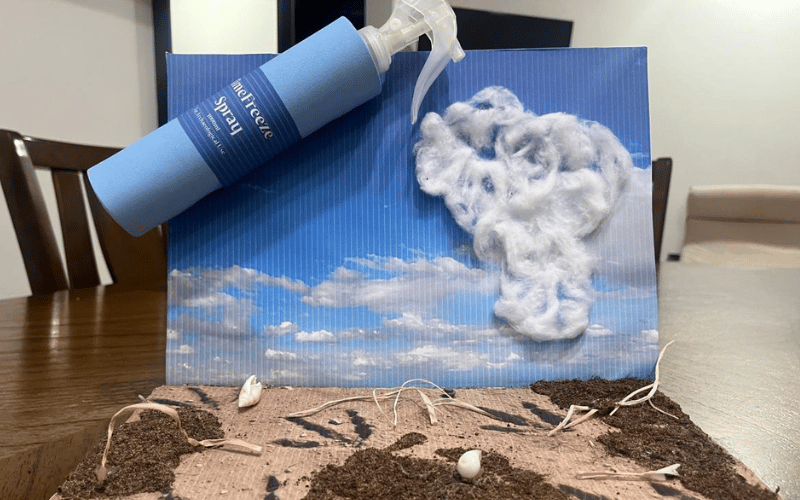
Alongside robotics, we also presented our innovation project called TimeFreeze Soil Foam. The project focused on a real-world problem faced by archaeologists: the fragility of discoveries during excavation. Current preservation methods can damage delicate details, while traditional chemicals often leave permanent residues that affect the historical integrity of excavation sites.
To address this issue, we developed a concept called TimeFreeze Soil Foam, a non-invasive spray designed to stabilize fragile soil impressions and archaeological discoveries. The spray temporarily hardens the top two millimeters into a protective shell, preserving micro-details without permanently altering the site. After approximately eighteen to thirty hours, embedded enzymes naturally break down the foam into harmless organic matter, allowing the environment to return to its original state without contamination.
As part of the project, we also created a physical prototype of the spray bottle. The prototype formula included:
- 440 ml deionized water as the base
- 5 g Carboxymethyl Cellulose for stabilization
- 1.5 g Xanthan Gum for viscosity control
- 3 ml Alkyl Polyglucoside and 0.5 g Citric Acid for foam formation and pH balance
- 0.25 g microencapsulated Cellulase and 5 ml Glycerol for timed biodegradation
Presenting the project to judges and explaining both the scientific concept and environmental benefits improved my communication and presentation skills while strengthening my understanding of innovation-driven problem solving.
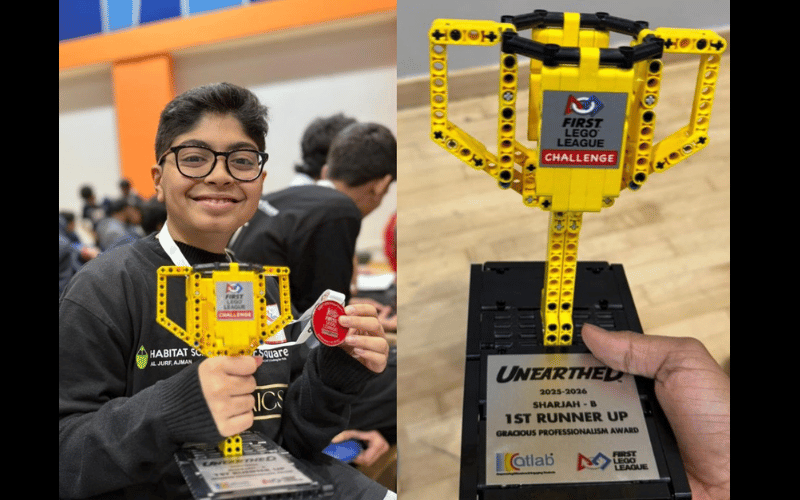
At the end of the competition, our team was honored with the General Proficiency Runner Up Award. Beyond the achievement itself, the experience taught me the value of adaptability, collaboration, engineering under pressure, and continuous learning. It was an experience that combined creativity, technology, and innovation in a truly memorable way.